A well-stocked kitchen is one of the clearest ways a short-term rental can feel more useful than a hotel. Guests may only make coffee and toast—or they may cook every meal for a week. Your goal is not to predict every recipe. It is to provide a dependable set of tools that covers the meals most travelers actually prepare.
The best Airbnb kitchens are complete, intuitive and easy to reset. Everything has a logical home, fragile items are limited, and the number of place settings matches the property’s maximum occupancy with a few sensible extras.
QUICK RULEStock at least one full place setting per guest, then add two extra settings when storage allows. Choose durable, replaceable pieces in neutral colors so new items can blend in over time. |
Start With the Meals Guests Actually Make
Before buying another gadget, think through a normal guest day: coffee or tea in the morning, eggs or oatmeal for breakfast, sandwiches at lunch, and pasta, rice, soup or a simple sheet-pan dinner at night. If the kitchen can handle those meals smoothly, it already covers most stays.
Everyday cookware
- One small and one large frying pan
- Two saucepans with matching lids
- One medium or large stockpot
- One rimmed baking sheet and one oven-safe baking dish
- One colander, two mixing bowls and a trivet
- One good chef’s knife, one paring knife and two cutting boards
Cooking tools
- Heat-safe spatula, turner, serving spoon and tongs
- Whisk, vegetable peeler, can opener and bottle opener
- Measuring cups and measuring spoons
- Box grater, kitchen scissors and oven mitts
- Food-storage containers with matching lids
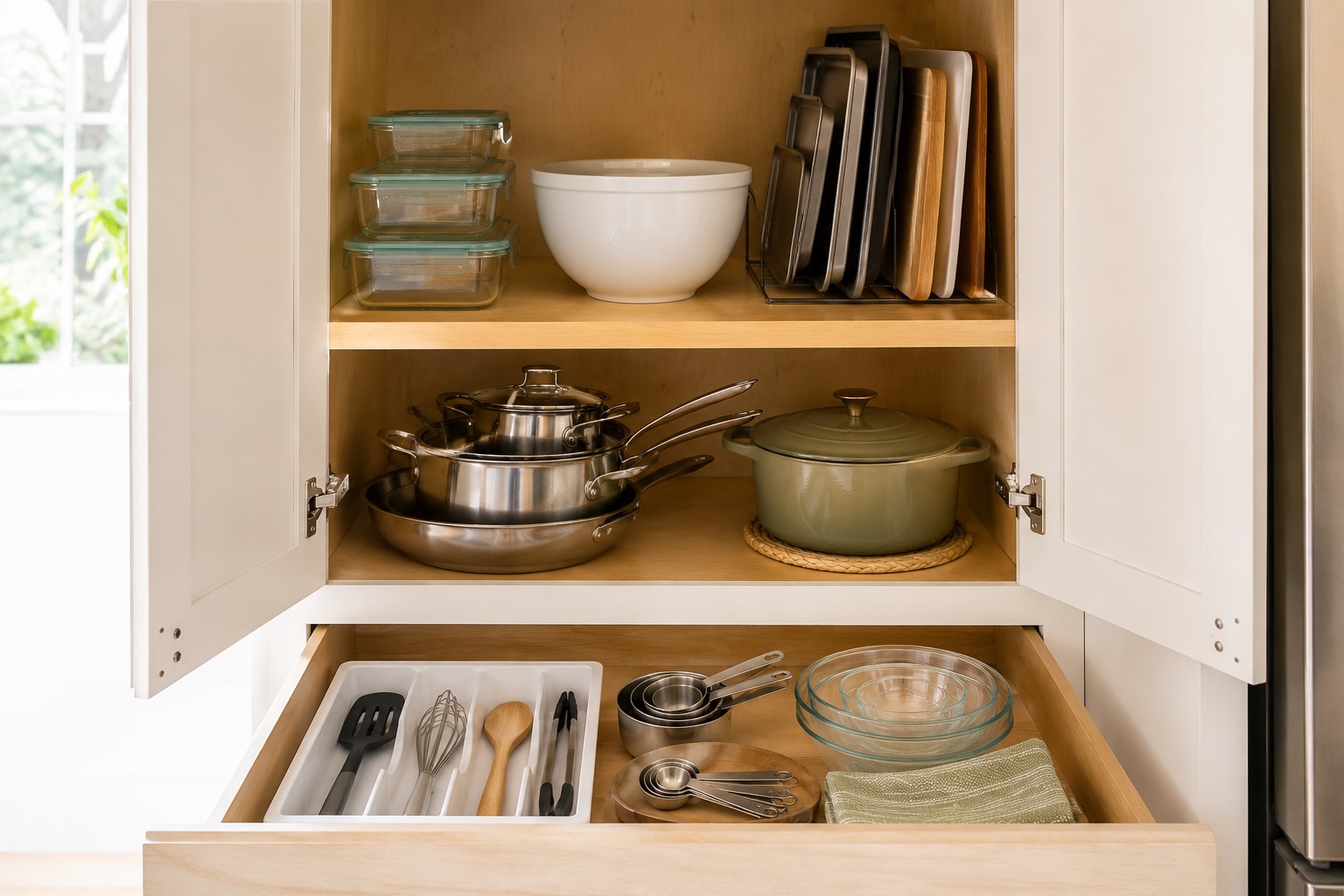 Group cooking tools by task so guests can find—and cleaners can reset—everything quickly.
Place Settings and Serving Pieces
Use dishes that are sturdy enough for frequent turnovers and simple enough to replace individually. An all-white or subtly speckled set photographs well, works with nearly any décor and makes chips easier to spot during inspection.
- Dinner plates, smaller plates and bowls
- Water glasses, mugs and a small set of durable wine glasses
- Forks, dinner knives, spoons and teaspoons
- Two serving bowls, one platter and two serving utensils
- A water pitcher or carafe
- Child-safe cups and plates if the listing is family-oriented
Coffee, Tea and Breakfast Basics
Coffee is a tiny amenity with an outsized effect on the first morning of a stay. Pick one brewing method that is obvious to use, leave concise instructions nearby and provide enough starter supplies for at least the first day.
- Drip coffee maker or single-serve machine
- Electric kettle
- Coffee filters or compatible pods
- A small starter supply of coffee, tea and sugar
- Toaster with a removable crumb tray
- Microwave-safe dishes and a covered splatter guard
HOST TIPAvoid stocking opened communal food unless your local rules and cleaning process support it. Individually sealed starter items are easier to inspect and replace. |
Small Appliances Worth the Counter Space
Counter space is also an amenity. Keep the permanent lineup focused: coffee maker, kettle and toaster are usually enough. A blender is useful in beach, wellness and family rentals; a rice cooker is valuable when it fits the property’s location and guest profile. Skip specialty appliances that are hard to clean or explain.
Cleaning and Reset Supplies
- Dish soap and a fresh sponge or washable dish brush
- Dishwasher tablets when applicable
- Hand soap and paper towels
- Trash bags sized for every kitchen bin
- Two absorbent dish towels and one drying mat
- Food-safe multipurpose cleaner stored away from children
How to Organize the Kitchen for Fewer Guest Questions
- Keep daily-use dishes near the dishwasher or drying area.
- Store cookware close to the range and prep tools near the main work surface.
- Use simple drawer dividers and cabinet labels only where the location is not obvious.
- Do not pack shelves tightly; leave enough room to return items without rearranging everything.
- Photograph the finished setup so turnover staff have a visual reset standard.
What Not to Put in an Airbnb Kitchen
Remove dull knives, badly scratched nonstick pans, chipped dishes, mismatched plastic containers and anything that requires complicated assembly. Expensive heirloom pieces, easily stained linens and novelty gadgets create more replacement work than guest value.
Final Kitchen Walkthrough
- Test every appliance and check that instructions are current.
- Count place settings against maximum occupancy.
- Confirm pan handles, lids and utensils are clean and undamaged.
- Replace stained towels, worn sponges and low starter supplies.
- Open every guest-facing cabinet and remove crumbs, grease and abandoned food.
- Check the refrigerator, freezer, oven, microwave and dishwasher for odors.
Frequently Asked Questions
How many dishes should an Airbnb have?
Provide at least one complete setting per person at maximum occupancy. Two extra settings are useful for breakage and for guests who do not want to wash dishes after every meal.
Do I need to provide pantry staples?
They are optional. A small, clearly dated supply of sealed salt, pepper, coffee, tea and sugar can be helpful, but only stock what your turnover team can inspect consistently.
Should I provide sharp knives?
Yes. One dependable chef’s knife and one paring knife are safer and more useful than a drawer of dull knives. Store them securely and inspect them during turnovers.
Is an air fryer an Airbnb essential?
Usually no. It can be a nice extra for longer-stay or family properties, but it adds cleaning time, counter clutter and another appliance that may need instructions.
Keep Planning Your Guest-Ready Stay
Airbnb Cleaning ChecklistBuild a reliable room-by-room turnover routine. |
Airbnb Bedroom IdeasCreate a bedroom guests remember for comfort. |
Airbnb Amenities Guests LoveChoose upgrades that add real stay value. |